Part One · The Orphan's Song
Chapter 20Point of No Return
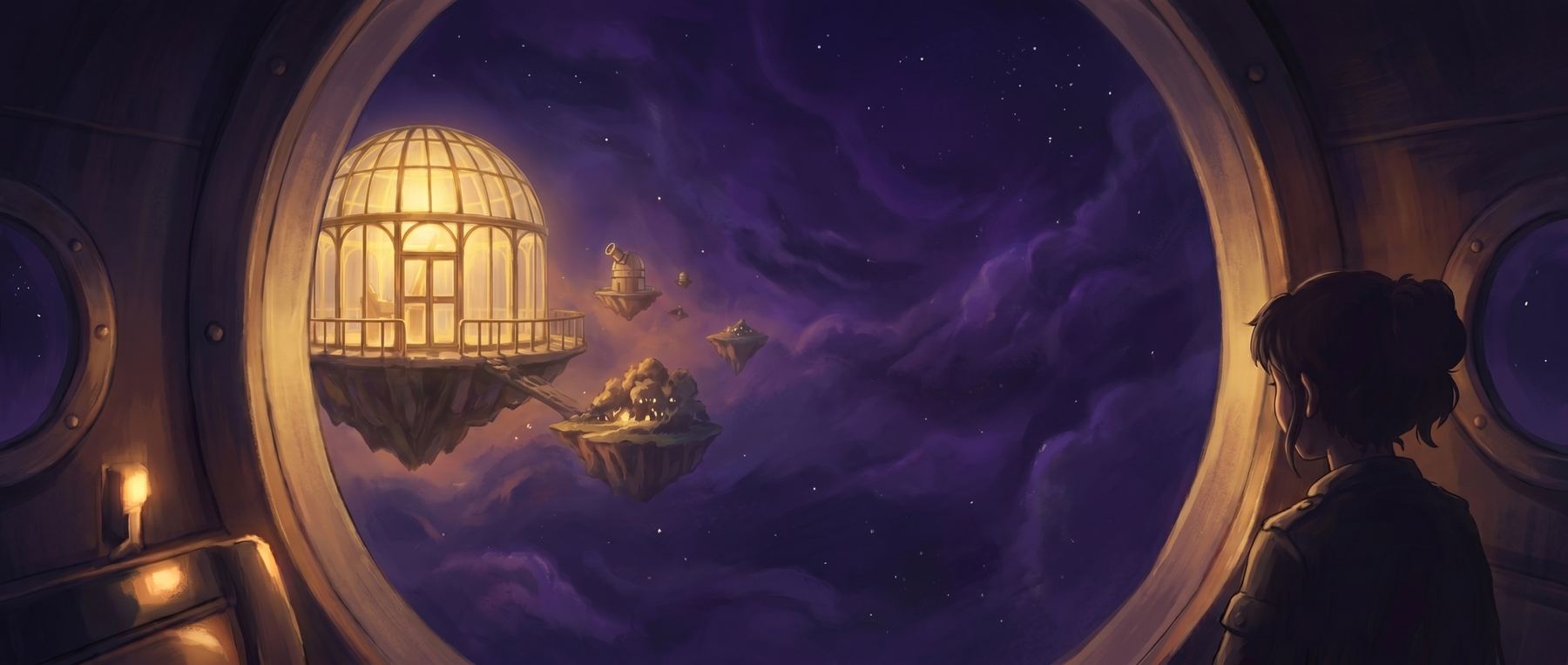
The summons arrived at 0117, two hours and fifty-two minutes before the window, and Kira answered it because the detention level had asked for her by name.
Hale's authorization came attached, one paragraph, every sentence true and every sentence a tong: Three of the individuals in custody have declined all questioning. The fourth has indicated willingness to speak, conditional on a single audience: Cadet Vance. The investigation values the statement. The cadet is under no obligation. Twenty minutes, recorded, observed. Under it, unsigned, unspoken, the real sentence: we have run out of our own kinds of doors, so we are trying yours.
Dray was already behind the observation glass when she arrived, stylus ready, instruments arrayed — wanting, she understood with total clarity, not the handler's statement but Kira's biometrics while she heard it. The institution had one move and it was always this move: aim the anomaly, record the result, file the budget request. Fine. Arrays pointed both directions. She'd come for her own reading.
The handler sat alone at a steel table, hands loose in their restraints, and she was nobody's monster from a recruitment poster: a woman in her sixties, gray crop, weather in her face, the heavy calluses of goad-work gloving both palms. On her left wrist, threaded over the restraint cuff where regulations should have removed it, she wore a child's bond-registry band — the kind issued at a first bonding, sized for a twelve-year-old, decades too small for her and worn anyway, the plastic gone amber with handling.
Kira sat down across from her and put the notebook on the table, closed.
"You're smaller than the feeds make you," the handler said. Her voice was unhurried, almost kind, and that was the first wrongness: no venom in it anywhere. "And you brought your accounts. Good. I asked for you because the people in your walls keep asking me who, and who doesn't matter, and you're the only one in this building who might ask something that does."
"Five Asterials," Kira said. "Driven on goads across a crowded arena. Start there."
"Start there." The woman nodded slowly, as if approving the question's craftsmanship. "The five were already gone, cadet. What the dark leaves behind isn't a creature anymore; it's a wound that walks. We don't make them — we find them, where your beacons stopped looking, and we give what's left of them a use before the end. You sat with one. You felt what's inside." Her eyes were steady. "Tell me I'm wrong about what you felt. An enemy? Or an ache?"
Kira said nothing. The cold patient thing behind her sternum shifted its weight.
"As for the noise in your bond." The handler turned one calloused palm up, indifferent to the glass and its recording. "Your investigators keep asking who built it. Wrong question. We didn't build it. We were handed the knife at the door — delivered clean, keyed, cut from a recording we could never have touched. Someone inside your walls wanted to know what your pair does when the thing between you fails." A small, terrible shrug. "So did we. The interests aligned. They usually do, with institutions. Ask your Director's office who carries its files. Or don't — you've already written it down, haven't you. Doors with the same office behind them."
It was a guess — it had to be a guess — and it landed anyway, and the cold thing stood up.
"My parents." Kira kept the register flat by main force. "Your people put daughter of traitors into eleven thousand ears. Sold to whom. Traitors to what."
And the handler's face did the thing Kira would carry off the map with her: it went gentle.
"Oh, child," she said. "You think it was an insult. It was a citation." She leaned forward as far as the restraints permitted, and her voice dropped into something that had rocked children to sleep in it. "He speaks of you, you know. Not as an asset. Not as a problem. He grieves you in advance — the way you'd grieve a granddaughter standing in the surf with her back to a wave you've already watched take everyone you ever loved. There is no anger in that man. I have stood in rooms with him for thirty years and I have never once heard anger. Only the patience of someone who has decided no one else will ever drown." She sat back. "You're going to him. Everyone in this building thinks you're going to your parents, and you are, but the heading runs through him, the way every heading out there does. When you meet him, he will be kind to you. I am telling you this as a mercy, because the kindness is the deepest water there is."
The cold thing reached its full height, and Kira's pulse went loud, and the rage arrived — finally, fully, the whole tournament's worth, the goads, the cages, the seam, the hijacked address system, the amber band on this gentle horror's wrist — and her vision began assembling the room the way it assembled hazard arrays: the table's bolt pattern, the restraint latencies, the glass's blind angle, four sentences ahead of a thing there was no version of her that would do, and her hands were flat on the table and pressing down as if the table were the lid of something.
One, she counted, in the pact's grammar. Two.
The handler watched her with professional interest. Behind the glass, instruments drank.
Seven. Eight.
"Eight," Kira said aloud, to nobody in the room who could parse it, and stood up, and took her notebook, and gave Dray's glass nothing — no spike, no flare, no exhibit, the leash hers and the aiming hers — and at the door, hand on the frame, she stopped.
"Your band," she said, not turning. "Whose was it?"
Silence behind her. Then, quietly, with the first hairline fracture in all that gentleness: "My daughter bonded at twelve. The Wound took them both off a survey rig at Meridian Deep. Your Academy's notice said the same thing yours did. Auto-corrected. Action required: none."
"That's the part we agree on," Kira said. "The rest of it, I'll see you at the trial."
She was in the corridor before the handler's voice followed her, unhurried to the last, pitched to carry exactly as far as it needed to:
"Special dispensation, cadet. Travel gently."
They lifted at 0402, and the Academy let them go because the Academy was reading its own instruments, and its instruments had been promised a boring day.
Window one opened at 0409 with eleven minutes of margin; Mira called the seam from the nav station, voice qualifier-free for the length of the burn; Orion flew it like a man executing conditionals he'd already fought and won in his sleep. Behind them the station shrank to a bright pin, then to one light among the lights, and Kira watched it go from the jump seat with the travel basin strapped beside her and her hand on the winter-moss collar, and felt nothing she had a procedure for.
The Ring took them in at 1040, one barge among hundreds, and nobody looked at three dock-coveralled figures with a crated basin because the Auron Ring had spent three centuries perfecting the courtesy of not looking.
Teth's office sat at the end of a freight gallery, and Kira read the man's whole biography before he said a word, because the room insisted on it. Every door in the place was propped — wedged, latched back, or removed outright from its hinges, even the cabinet doors, even the cold-locker, a room where nothing was ever permitted to finish closing. And behind the counter, plumbed in and temperature-held and immaculately clean, sat a warming basin, two-thirds the size of Shimmer's. Empty. The gauge on its rim read two degrees over blood-warm, and the wear on the gauge's set-dial said it had read exactly that for a very long time.
Shimmer's light, dim in her own basin, went still at the sight of it. Across the rationed channel: a pressure, soft, the shape a question makes when it already knows.
The man himself was broad and graying and moved like a dockhand who'd been promoted against his will to owning things. He took in the three of them, the crate, the basin, the hour, and addressed the room with cheerful, transactional warmth.
"Academy hardware, civilian clothes, and a heading you'd rather not say out loud. That's not a customer profile, that's a confession." He spread his hands on the counter. "Convince me I want it."
"The third colleague," Kira said, "is calling the last one in."
Teth went very quiet.
His eyes moved from her face to the basin-crate to the wrapped knuckles and back, and something behind them re-shelved twenty years of inventory. When he spoke again the cheer was still there, but it had stopped being a surface and become a decision.
"The third colleague," he repeated. "There's a phrase I'd filed under never. You know what she told me, the day she paid for—" he didn't gesture at the empty basin; he very specifically didn't, which was its own gesture— "for a thing I needed and couldn't afford? She said: someday a debt of mine will walk in wearing somebody's face, and you'll know it because it keeps accounts and it travels with its own water." He blew out a breath, half a laugh with freight on it. "Sixteen years I've kept the kettle on for that sentence."
He didn't ask what the job was. He asked for the heading's first leg only — "I move people in legs; whole journeys are how fixers die" — and Mira gave him window two's vector, and he whistled at it, and looked at the route's stitched seam of dark for a long moment with an expert's pure aesthetic pleasure. "Who built this?"
"I did," Mira said. "Nobody sanctioned it."
"Best kind of work." He was already writing — paper, Kira noted; the man's whole ledger ran on paper, the one archive nobody could smooth remotely. "You'll take the Margin. Window-runner, no transponder, papers that say she's four other boats. I named her for the only place I've ever lived." He tore the chit free and held it a moment. "The dock fees, the registry blind, the gate man's sudden nap — that part's mine. Don't reach for your lumen, I can see you doing arithmetic. It's paid. She paid it, a long time ago, and I've been holding her change."
"What's your price?" Orion asked, flat, because somebody on the team had to be him.
"A favor. Unspecified. Collected when I collect it." Teth smiled, and for a moment the warmth and the transaction were the same thing all the way down. "Favors are just friendship with receipts, son. I'll write you a receipt."
He walked them to the freight lock himself, past all his propped and wedged and amputated doors, and at the ramp he stood a moment with his hand on the frame, where a door would have been if he'd permitted one.
"Whatever's at the far end of that seam," he said. "When a door starts closing on you out there — and one will — don't waste your strength holding it. Get the people through. Doors close. That's what they're for. People are not." He slapped the frame twice, dockhand's benediction. "Catch your window."
The map ended at 1818, and they crossed it on purpose, which was the entire point.
Mira called the boundary the way she called everything, precisely and twice: the last monitored Beacon falling astern, its receiver array dark for maintenance exactly as scheduled, the Margin riding the window's center line with four minutes of margin in hand. Ahead, the Fringe past the Fringe — unchartered, unsurveyed, the parents' heading running out into it like an arrow into deep water.
On the console between the pilot stations sat the compliance rig.
It had ridden with them from the Academy, faithfully narrating: position, biometrics, the continuous telemetry the advisory had escalated, the leash in its final form. To this moment, technically, the day could still be explained — an unauthorized excursion, a medical pretext, a reprimand survivable by cadets with titles. The rig was the last thing the institution held. Cutting its feed cut the explanation. There would be no version of any future in which they had not done this.
"Say it now if you're saying it," Kira said.
"If we go back, we go back to a building that hands knives out its own door." Orion's conditionals had run dry; what was left was load-bearing. "I'm done auditing the premise."
Mira's hands were shaking. She folded them, unfolded them, and logged the time stamp in her pad first — 1819:tick, witnessed — because some people steady themselves on truth the way others do on rails. "For the record, the probability we were ever walking this back passed negligible three chapters of my life ago. Proceed."
Kira took the rig's feed line in her wrapped fingers. Mine to cut. The institution had metered her sixteen years — measured, filed, smoothed, escalated — and every meter of it had pointed inward, at her, the instrument fitted to other people's questions.
Decide early what you point yourself at.
She cut the feed.
Restore feed within 24 hours or cadet
Continuing obligations unaffected.
"Unaffected," Kira said. "They'll put it on my memorial."
The box died with the feed, mid-gloss, the institution's voice cut off in the act of pretending it still had one — and the silence that followed it was not empty. The silence had texture. Without the compliance rig's subcarrier, without the Beacon grid's omnipresent hum, the network out here arrived bare: thinner, wilder, an old road gone to grass, and her sense of it widened the way the cargo bay's silence had once widened, a sensorium discovering the room it had always been standing in. Beside her the travel basin's light rose — Shimmer lifting out of her coil, dim prisms tasting the unfenced dark, and across the channel came one rationed question-shape, awed and small: bigger?
"Yeah," Kira said. "It goes all the way down out here."
The System, which had been waiting three weeks for her to stop being explicable, chose that moment to file its interpretation.
RESONANT → NETWORK TOUCHED
You were given one bond, and you kept
an arena, an evacuation. Rooms first.
Then the web between rooms.
The network has decided to return
the attention.
She sat with it a long moment, the way the boxes had taught her to. Not granted — witnessed; the network reading her pattern of conduct back to her like a clerk who had finally finished the file. Network Touched. The class her parents' daughter would have, she supposed, if their daughter had spent three weeks doing exactly what she had done, which was the entire epistemology of the thing. Touched, as in contact. Touched, as in marked. The old vocabulary of her evaluations, taken down off the wanted poster and reframed, one more time, as a diploma.
The level came an hour later, spaced with the courtliness the network reserved for grants it meant.
LEVEL 8 → 10
ATT 13 → 14 · RES 12 → 13
You took the leash off your own record.
RANK E holds. A gate deed has been
the field, carrying others. The network
is patient about doors it has already
seen opened.
The numbers turned to body before she'd finished reading them. Shimmer's presence, even rationed, even muffled by the seam, arrived suddenly with more harmonics in it — the sheeted furniture gaining grain through the cloth, her partner's dimness resolving into the dozen specific dimnesses it had always actually been — and underneath, in the channels of her that the instruments had never parsed, a quiet broadening, like a hallway she hadn't known was narrow. Rank E holds. Announce early, pay late: somewhere ahead, a door already marked. She filed the promise next to the others.
It was deep in the third window, 2300 and the crew bunked down in shifts, that the last grant came — and it came the way the first one ever had, off-schedule and strange, because something out in the dark called for it.
She was at the viewport with the notebook when the sensation arrived: not sight, not sound — weather. A pressure change in a sense she'd owned for three weeks and never once felt at range, rolling in across the bare network from far down the heading, from past everything, the way storm-front air arrives hours before the storm. Vast. Slow. An ache with a shape. The exact signature she had written into a notebook at 03:17 with a question mark she'd been ashamed of — except that the question mark had been the observatory's, a flicker seen across lightyears of glass, and this was tactile, this was the network itself flinching somewhere ahead of them, the medium they were swimming through remembering, all at once, that it was wounded.
Network Echo (passive)
Range is a property of attention. You
listened to a sector through a notebook
for sixteen years. The network has agreed
to meet you halfway.
Disturbances in the web will arrive
as weather.
Shimmer was up out of the basin and pressed against her jaw before the box had faded, prisms gathered tight, and they felt it together through the bond's rationed thread: far off, dead along their mother-drawn heading, the wound in the world turning over in its sleep. Not aware of them. Not yet. But the heading ran through it the way every heading out here did, and somewhere this side of it waited a kind-eyed man who grieved her in advance, and somewhere past it, if twelve years had left anything to find, two surveyors who had flown into this exact weather on purpose, with their daughter's name unfinished on a flimsy.
Kira became aware, slowly, of what her body was doing. It was braced — had been braced for an hour, some animal layer of her waiting for the suppression field's swaddle to catch all this and damp it to sport, the way three weeks of arenas had taught her nerves that pattern-violence came fenced. There was no fence. There was no field, no yield threshold, no referee, no damping, nothing between her bare new sense and the oldest ache in the universe but distance, and the distance was shrinking at one window per day. Her body had learned the arena's womb and now, out here, it finally understood the lesson's price: every fight she had ever fought had been held by a room built to forgive mistakes.
The dark ahead forgave nothing. The dark ahead wasn't even angry — that was the worst of it, she'd touched it with her own hand, it was just hungry the way the drowning are hungry, and vast the way grief is vast, and they were flying into its weather in a borrowed boat named after the only place anyone really lived.
She got out the notebook, because some things had to be written down to be survived, and printed the entry that closed the book on every room she'd ever fought in:
23:17 — Off the map. Class, level, and a new sense that says the storm is real and we are sailing at it. Three humans, three Asterials, one heading. The fields are all behind us now. Note for the file, in my own hand, so I can't pretend later that I didn't know:
Everything before was play.
✦ Chapter woven into the thread ✦