Hook
This milestone matters because it is the point where Steady Stars stopped being judged as an asset pipeline problem and started being judged as a player experience problem.
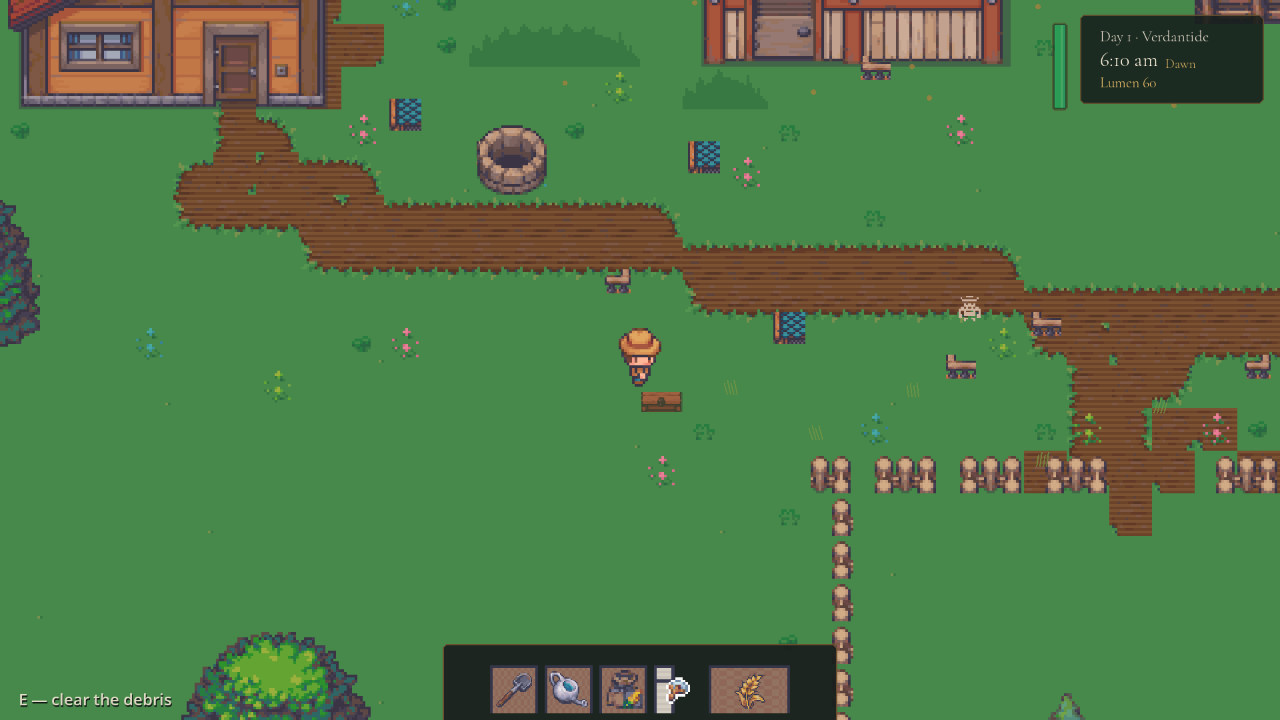
The visible change is simple: I can spawn into the homestead, read the HUD, see the cabin and barn, walk toward a first field, clear debris, and make the ground respond. The deeper change is that the game is no longer held together by guessed atlas cells and fragile scene fragments. Codex helped move the build onto Godot-native LimeZu resources, semantic prefabs, and review evidence that I can keep checking as the world gets denser.
What Changed
The commit range for this post is d8726a2..2c389fc, ending at 2c389fc: Move Steady Stars to Godot-native LimeZu pipeline.
That one line hides a lot of foundation work. The LimeZu catalog is now active inside Godot. Buildings, trees, UI pieces, and large props are represented as resources or prefabs with meaning, not as loose guesses into a source atlas. The player and NPC animation paths are guarded so tool actions do not silently fall back to the wrong visual state. The HUD and inventory no longer lean on a broken panel tile. Collision and y-sort checks are part of the gate, which matters because cozy games collapse fast when a player cannot trust where objects live.
Codex And Godot Workflow
The useful part of Codex here was not that it wrote a giant diff. The useful part was pressure against vague progress.
For this pass, I wanted every public claim to have a local artifact behind it: a commit range, a passing verify command, a current screenshot manifest, or a runtime capture. That changed how I reviewed the work. Instead of asking “did the import finish,” I asked “does the first frame tell a cold player what kind of game this is.” Instead of treating UI repair as done because the scene loaded, I checked whether the energy bar overpowered the farm. Instead of accepting action code because tests passed, I captured the hoe before contact, at contact, and after the state change.
That is the Codex + Godot loop I want to keep showing in public: prompt, inspect, edit, verify, capture, then write down what is actually true.
Visible Result
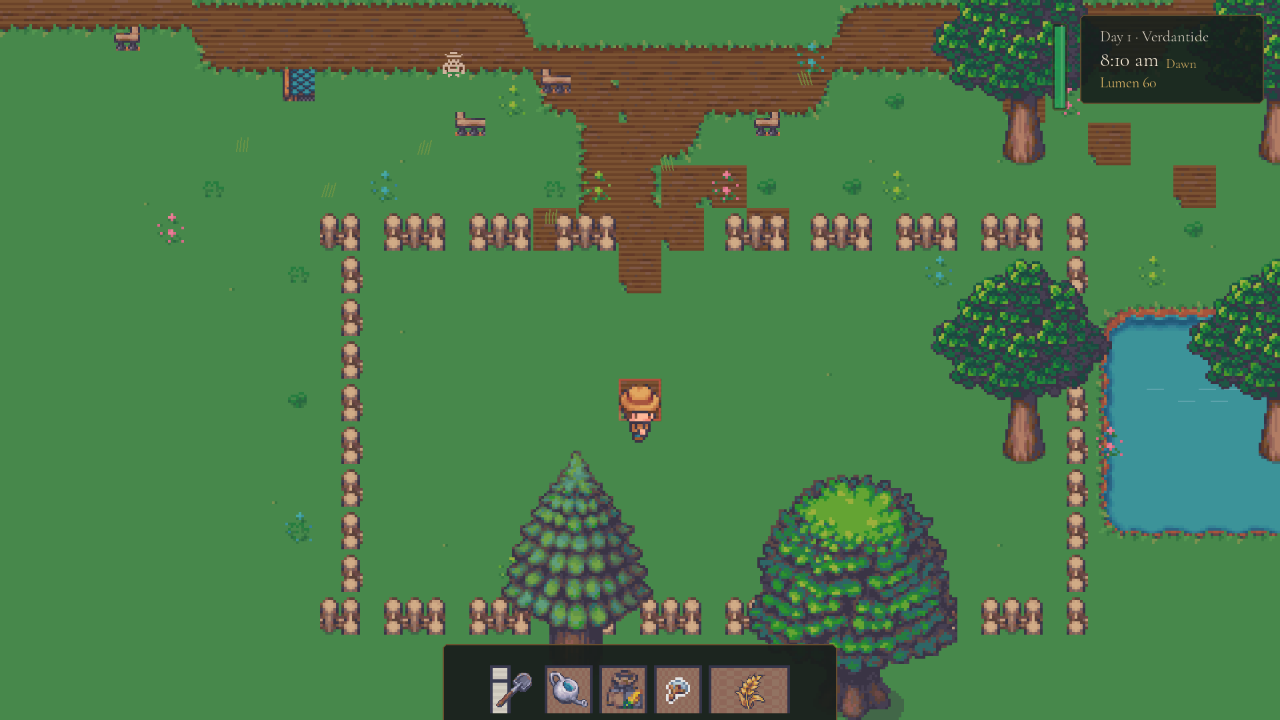
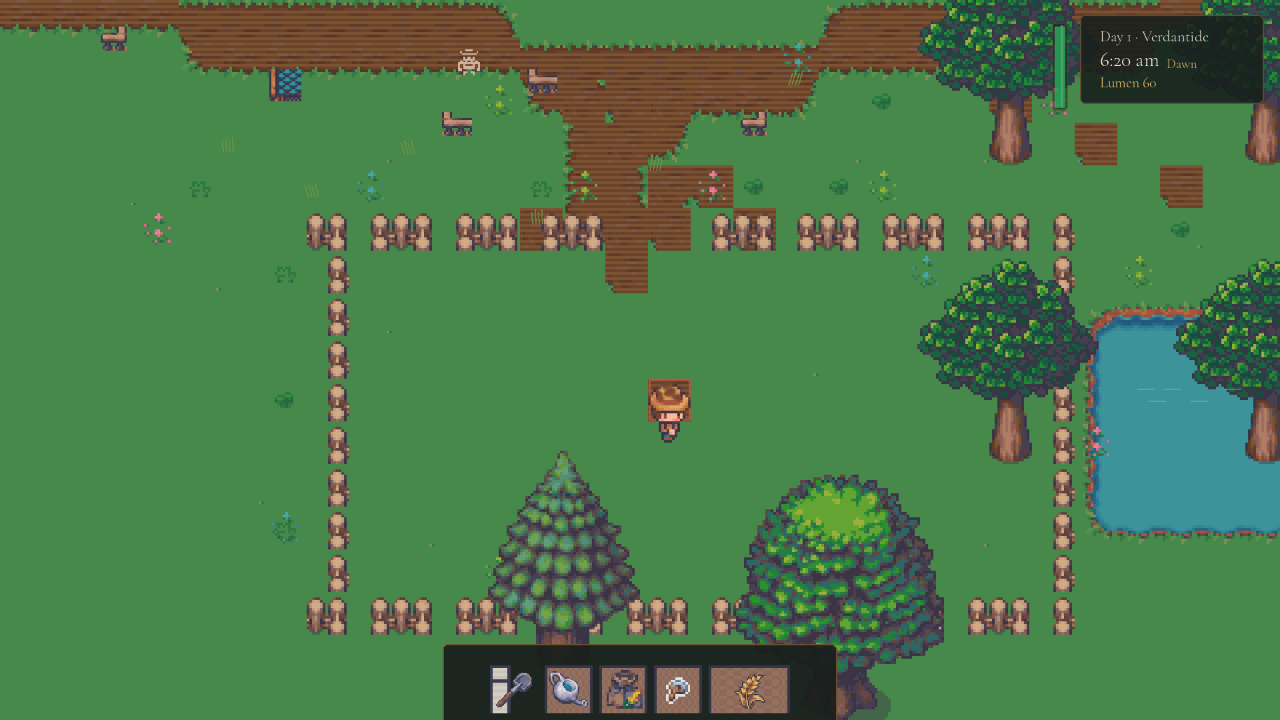
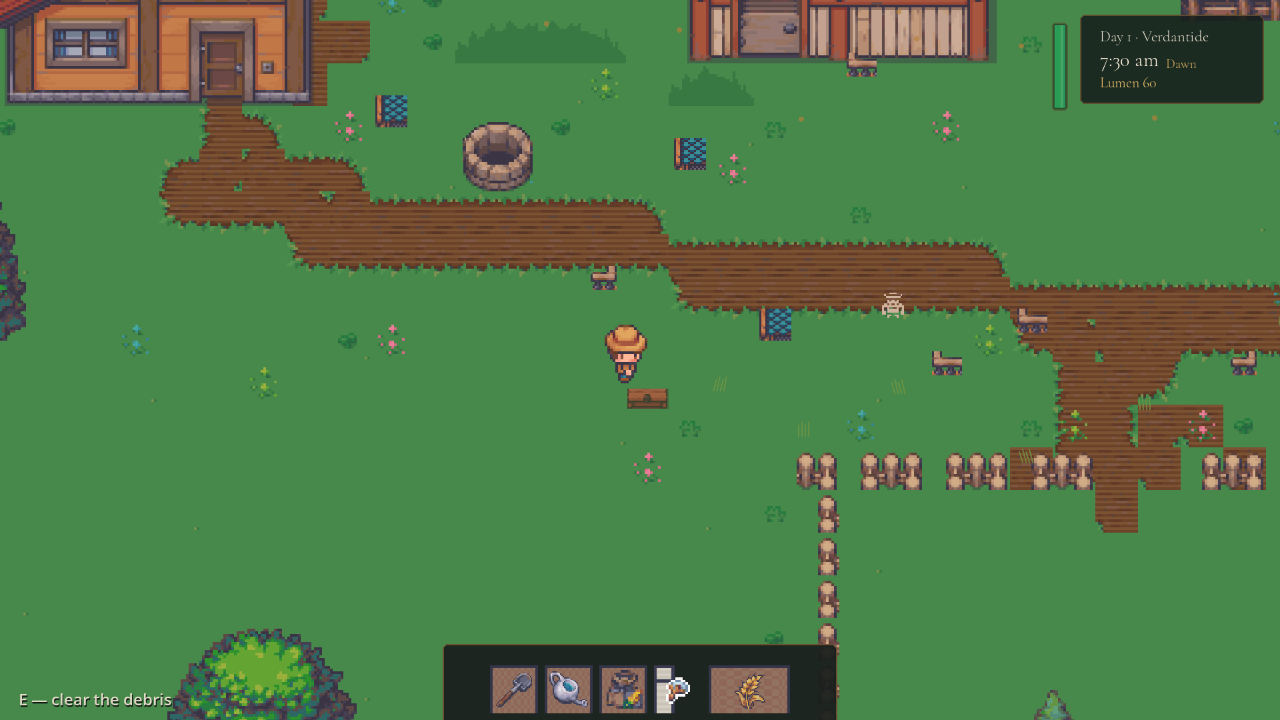
The new current-round audit points at git_sha: 2c389fc and includes spawn, idle, hoe contact, clean field, and tilled field captures. These are not beauty shots. They are proof that the build has crossed a threshold.
At spawn, the homestead reads as a place: cabin, barn, paths, player, toolbar, clock, and farm objects are all on screen. The field is still rough, but it is legible enough to test. The hoe action has a contact moment and a persistent after-state. The idle capture shows the scene after time has passed, which matters because the next risk is not whether Godot can display the world. The next risk is whether the world feels alive when the player is not pushing it.
What Broke Or Surprised Me
The surprise was that a healthier foundation made the remaining problems more obvious.
When the asset pipeline was unstable, every issue looked technical. After the LimeZu resources, prefabs, collisions, animations, HUD, and audit captures started lining up, the real weakness moved into the first ten minutes. Is the barn awkwardly cropped? Is the clock readable? Does the farm patch pull the eye? Does the first prompt teach farming or just storage? Can a stranger infer clear, till, plant, water, sleep without a tutorial wall?
Those are better problems to have, but they are not smaller problems.
Next Experiment
The next workstream is the first-farm and first-ten-minutes acceptance gate. I am not jumping into town, economy, fishing, or broader P2 systems yet. The core promise has to land first.
The gate is concrete: the spawn frame should show cabin, player, farm affordance, and barn without awkward cropping. The HUD should read quickly without owning the screen. Sixty seconds idle should show life. The real new-game path should carry the player from title to arrival to free play with enough context to understand who they are and what to do next.
That is the next devlog I want to earn: not “more systems,” but “a stranger understands day one.”