Hook
Reference study is dangerous when it turns into surface copying. It is useful when it turns into better questions.
The Stardew parity work was never about making Steady Stars look like Stardew. It was about understanding why a mature farming game reads so quickly: how dense the farm is, where the HUD sits, how tool targets are communicated, how town and field transitions feel, and how much the player understands before any tutorial text appears.
What Changed
The main commit was 2847361: Stardew parity audit: 16-surface gap analysis vs current greybox. The related planning work in 2eb145b turned that study into eight core-loop rulings for the road ahead.
I am intentionally not publishing the raw reference captures here. The useful public artifact is the translation layer: what Steady Stars should learn. The output became a checklist around first-frame composition, farm density, HUD readability, tool feedback, shops, inventory, festivals, fishing, and progression surfaces.
Codex And Godot Workflow
Codex helped by turning a messy comparison exercise into structured decisions. A human can look at a reference and say “this feels better.” That is not enough for implementation.
The better question is: what exact rule would make the next Godot scene capture stronger? More density near the path? A clearer first farm patch? Less HUD weight? A target-cell cue? A pond sightline? Those are rules an agent can work against and a screenshot can verify.
Visible Result
The immediate visible result was not a new system. It was a stronger review lens.
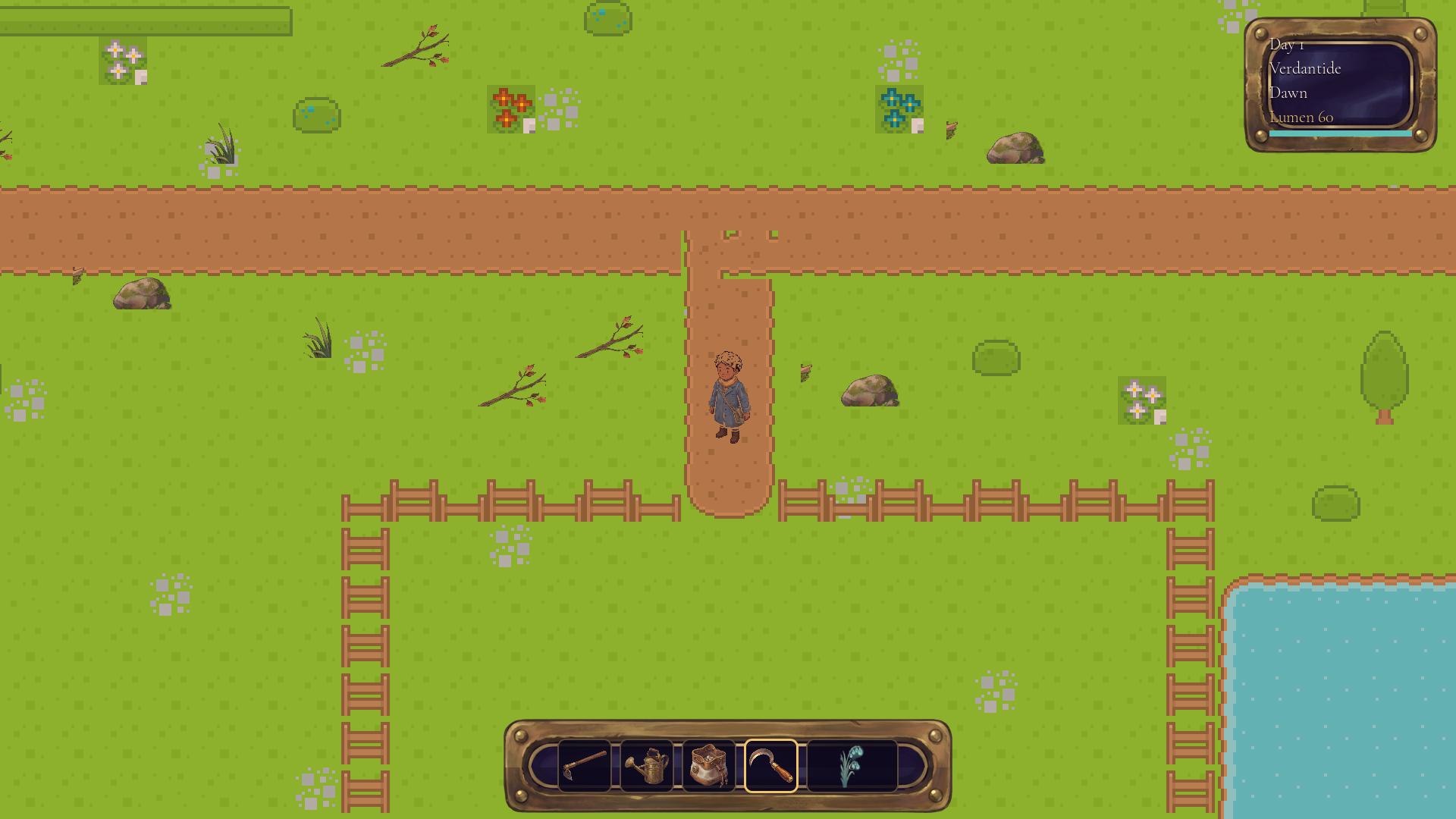
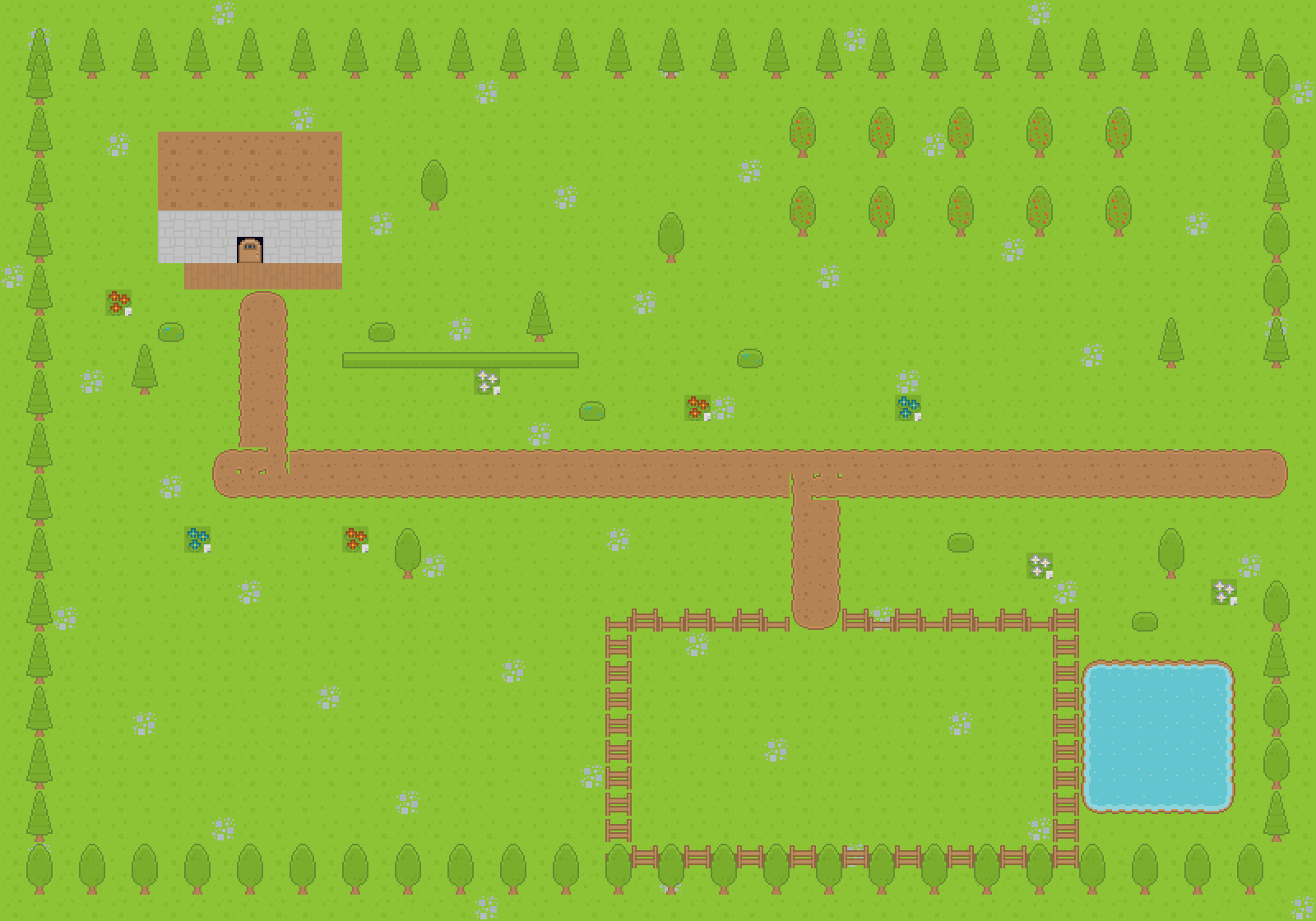
The greybox farm images became less acceptable once the parity checklist existed. Empty grass stopped reading as “space for later” and started reading as a player-experience failure. The farm gate, map overview, and first field were no longer just scenes. They were tests of whether the first ten minutes could carry a cold player.
What Broke Or Surprised Me
The surprise was how much of a farming game’s feel comes from density and hierarchy, not mechanics.
You can have crops, tools, shops, and time-of-day running, and the first frame can still fail. If the player does not know where they are, what matters, and what to try first, the systems are just inventory.
Next Experiment
The parity checklist now feeds the first-farm acceptance gate. I want every reference lesson to become a Steady Stars-specific question with evidence attached: screenshot, runtime log, or playtest note.