Hook
Asset packs are tempting because they make progress visible quickly. They also hide the hardest part.
The kit survey around 9e7b06e helped me separate two questions. First: do I have enough visual material to build a cozy farming baseline? Second: can the game turn those assets into a readable first ten minutes? The first answer can come from a spreadsheet. The second answer only comes from Godot captures.
What Changed
The commit 9e7b06e surveyed a large set of kit options, gaps, fallbacks, and import order. That work mattered because it stopped the project from treating asset choice as vibes. The survey forced every candidate pack to answer what it could cover: terrain, crops, UI, characters, tools, props, town surfaces, effects, and future systems.
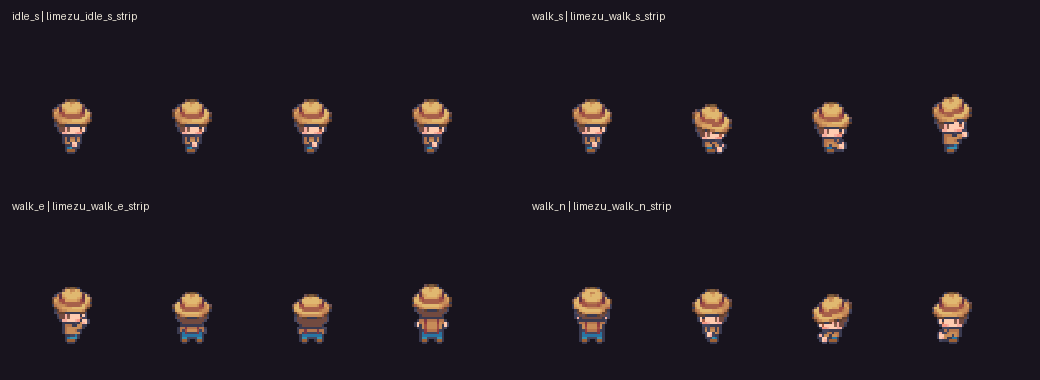
The later LimeZu work benefited from that discipline. Once the project knew what the packs were supposed to cover, Codex could help turn source assets into Godot resources, named outputs, and audit images instead of ad hoc crops.
Codex And Godot Workflow
This is a good example of where AI assistance is useful but not magical. Codex can scan files, build import tables, write scripts, and keep naming consistent. It cannot decide whether a first farm feels neglected but inviting unless the project defines that target.
So the workflow became catalog first, judgment second. Get the candidate assets into a shape Godot can inspect. Then review them in scenes, audits, and captures. If a sprite looks good alone but fails at gameplay scale, it is not a solved problem.
Visible Result
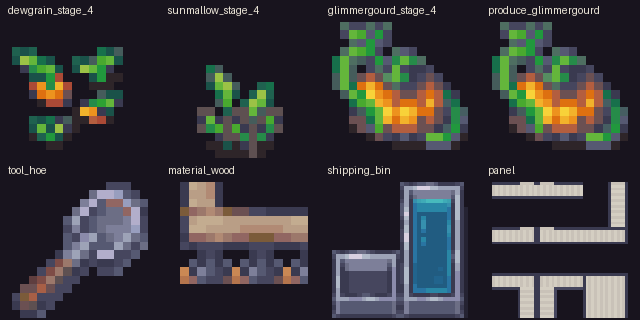
The useful output is the runtime asset audit: tools, crops, UI pieces, debris, and actor strips shown as game-ready materials rather than abstract source sheets.
That proof is modest, but it is important. It means future posts can focus less on “can we import this” and more on “does this make the farm easier to understand.”
What Broke Or Surprised Me
The surprise was how often “complete” asset packs still leave design gaps. A pack may include a tree, but not the collision shape, y-sort expectation, canopy footprint, and first-frame composition rule. It may include tools, but not the contact timing, sound, particles, and denial feedback that make tools feel responsive.
Next Experiment
The next step is to keep judging assets in context. Every asset that matters to the first ten minutes should appear in a runtime capture, not just an import folder.